
Why you need a Virtual Doula in pregnancy - before you even get to the birth part!
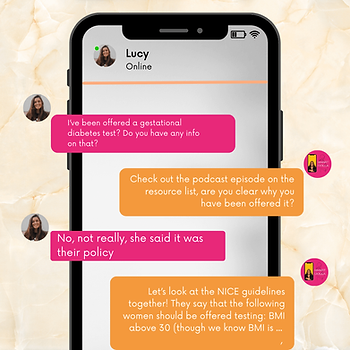
Why hire a virtual doula during pregnancy
A real client story about virtual doula support that starts long before labour
One of the biggest misconceptions about doulas is that our main role is birth support.
Maybe that’s why so many people start looking for a doula in their third trimester, when everything suddenly feels very real and very imminent!
But so much of my work happens before anyone is in labour. The appointments. The unexpected recommendations. The late-night worries. The moments when you know what you want, but need help working out what to do next.
This is the story of a virtual doula client who booked early, and how that support became part of her pregnancy long before we got to the birth. She has given me permission to share her journey. And if you think you know who she is… no you don’t!
The push to book
Maybe you found my Instagram in a previous pregnancy. You’ve been lurking for a while. Your birth doesn’t go to plan, and although you thought you had your eyes open, you weren’t prepared for everything that happened. You’re left feeling shellshocked.
You keep lurking. You keep learning. And then… a positive test!
THIS time, you want to prepare differently. You want emotional support and someone to help you make sense of the evidence from the beginning, rather than trying to work it all out on your own.
Perhaps we have a discovery call and you feel a spark. Perhaps you already feel like you know me and book straight away. Either way, this is where the support starts.
Your plan begins to take shape
For this client, the starting point was a vaginal birth after two caesareans, often shortened to VBAC2C. From here, I’m going to tell her story as “you”, because this is what that ongoing support can look like.
You already know what you want. But you want to talk it through with someone who gets you. We discuss your previous births, your frustrations, your regrets and the things you want to feel differently about this time.
In your gut, you want to plan a vaginal birth. But is it possible? What are the risks? And how will your maternity team respond?
We look at the Royal College of Obstetricians and Gynaecologists (RCOG) guidance and the research behind it. We talk through the questions it raises for your own care. You feel comfortable enough to take your plan forward and discuss it with your maternity team.
You go into your next appointment knowing what you want to ask, and why it matters to you.
The wording that gave her hope:
-Can women with two or more prior caesareans be offered planned VBAC?
Women who have had two or more prior lower segment caesarean deliveries may be offered VBAC after counselling by a senior obstetrician. This should include the risk of uterine rupture and maternal morbidity, and the individual likelihood of successful VBAC (e.g. given a history of prior vaginal delivery). Labour should be conducted in a centre with suitable expertise and recourse to immediate surgical delivery.
Birth preparation starts early
We talk about how you prepared for your previous births. This time, you want something different. I know about a VBAC-specific online group course starting soon, with some absolute powerhouses in the birth world. You take another leap of faith and book on, starting your birth preparation before your first scan!
Incase you are wondering the course was 'Unleash your VBAC power', you can find it here:
Support through the early weeks
The morning sickness starts. We talk about how you’re feeling, herbal teas and commercially available remedies, and I help you find information to discuss with your midwife.
Then you have some early pregnancy bleeding. I’m there to listen, check in and help you think through your questions. The bleeding begins to slow. That emotional support sits alongside medical care; it cannot tell you what is causing bleeding or whether you need assessment.
Later, you have a wobble about uterine rupture. We return to the evidence, look at the figures in context and talk through what you want to ask your team. You feel more settled about your plan.
The pregnancy sickness recommendations:
The rupture data: https://pubmed.ncbi.nlm.nih.gov/15598960/
The first midwife appointment
Before your appointment, we prepare. You want to put your cards on the table, explain your plan and ask how the team can support you.
It doesn’t go well.
When you explain what you want, the response is, “Absolutely not; you’ll be having a caesarean.” You’re told you became pregnant too soon after your last baby, and concerns are raised about your previous baby’s size. You leave feeling devastated.
We talk it through. I help you find information about birth spacing and the concerns raised about size, so you can ask for an explanation that relates to your own circumstances. We also work on a complaint email together, and you request a different midwife.
You don’t have to find the words for all of that while you’re still trying to process how the appointment felt.
6.4 What factors are associated with an increased risk of uterine rupture in women undergoing VBAC? An individualised assessment of the suitability for VBAC should be made in women with factors that increase the risk of uterine rupture. Factors that potentially increase the risk of uterine rupture include short inter-delivery interval (less than 12 months since last delivery).
A new midwife and a different conversation
You’re assigned a new midwife who feels like an advocate. A weight lifts from your shoulders: you don’t have to return to the same conversation with the previous midwife.
Before your first consultant appointment, we have a call. We discuss what might come up, what you want to ask about your previous surgeries and what you hope to achieve. You’re nervous, but you have a plan.
This time, the conversation is respectful. You ask your questions, the consultant agrees to refer you to an alongside birth centre, and you leave feeling as though your plan is moving forward.
An unexpected placenta finding
Then a scan identifies a low-lying placenta, with questions about its position in relation to your caesarean scar. We talk about placenta accreta as something to ask your team about. You raise it with your midwife, who checks with a sonographer about assessment at the next scan.
You start learning about placenta praevia and placenta accreta, just in case. It isn’t fun. But you want to understand the conversations ahead and be prepared if the findings change your plans.
Over the following scans, the picture isn’t straightforward. At one appointment, you’re reassured about the position in relation to your scar. Later, there are further questions, and your notes describe the placenta covering the opening of your cervix. More scans follow, and you’re referred to a specialist.
We find podcasts to help you understand the terminology and the questions being discussed. You message me with worries and frustrations. We talk about ways to work through fear and cope with the uncertainty, including the idea of a fear-release ceremony.
Eventually, you’re told the specialist assessment has not identified accreta. That is a huge relief. The placenta is still partly covering the cervical opening, so the waiting continues.
The RCOG guidelines:
The podcasts:
The everyday things still matter
Alongside all of this, you’re exhausted and told your iron is low. You’re prescribed iron tablets, but want to explore a different approach. I send you a podcast discussing the evidence around iron. You order a product described as gentle iron and later tell me you’re starting to feel better.
And sometimes there is nothing new to research. You’re waiting for another scan, and being in limbo is hard. I listen. We chat about herbal tea and motherhood. You have somewhere to put the worry, even when neither of us can make the next appointment come any sooner.
Making room for more than one plan
At the next placenta check, you’re told the edge is around 1 cm from the cervical opening. Another scan is booked. Before your consultant appointment, I pull up the guidance you want to discuss, including the section about placental distance and options for birth. The consultant continues to recommend a planned caesarean.
We start preparing for that possibility, whilst still hoping the placenta’s position will change. You want a positive caesarean plan too, if that becomes the right option for you.
We request the hospital’s procedures for gentle or maternal-assisted caesarean, so you can find out what may be available and discuss your preferences in advance.
At the same time, we look more closely at the research on placental position and vaginal birth, and what it can and cannot tell you about your own situation after two caesareans. You want to keep discussing the possibility of a vaginal birth with your team.
A systematic review and meta-analysis of 10 articles on birth outcomes in 592 women with a low-lying placenta in the third trimester found that successful vaginal birth depends on the distance between the placental edge and IO, with 43% vaginal birth at 1–10 mm, 85% at 11–20 mm and 82% at above 20 mm.https://obgyn.onlinelibrary.wiley.com/doi/10.1111/1471-0528.70239
The final placenta check
IT’S MOVED!
After all that waiting, you’re told the placenta has moved clear. The consultant still tries to book a planned caesarean, but this time you feel able to leave without agreeing to a booking you don’t want. You want to continue the conversation about your vaginal birth plan.
Getting your birth plan heard
The next step is an out-of-guidance plan: a plan for preferences that sit outside the service’s usual guidance. You want to discuss VBAC2C in the alongside birth centre, intermittent monitoring and access to a pool.
You’re passed from pillar to post. It’s frustrating, but you keep pushing for a proper conversation and a written plan.
Eventually, a draft arrives. It reads like a template, doesn’t reflect what you discussed and even contains another woman’s details. I review it with you. You rewrite it to reflect your wishes, and it goes back for correction and review.
Finally, your midwife steps in to coordinate the sign-off process and finds the right people. You have someone helping you move things forward.
And now we wait
This story isn’t over. At the time of writing, this client hasn’t given birth yet. We don’t know how her birth will unfold.
But look at how much has already happened. She has worked through difficult appointments, changed midwife, prepared for different possibilities and kept asking for a plan that reflects her wishes. She has had someone alongside her for the research and the emails, and for the days when she simply needed to talk.
That is what I mean when I say doula support starts long before labour. Birth support matters, of course it does. But you don’t have to wait until your third trimester to have support with the pregnancy you’re living through right now.
What could support look like for you
Maybe you’ve recognised a little bit of yourself in this story.
You know you want this pregnancy to feel different, but you’re already wondering how you’ll handle the appointments, the recommendations and all the information coming your way.
Or maybe this is your first baby, and you’d love someone to talk things through with as you find your feet.
You don’t need to have had a difficult birth, be planning a VBAC or have a complicated pregnancy to want support.
That’s why I want to introduce you to my new virtual doula packages, including the Smart Birth Experience. If this story has made you think, “I’d love someone in my corner too”, come and have a look at the options.
Think about what you’d find helpful.
Space to talk about your previous birth? Help making sense of information before an appointment? Someone to work through your questions with while your plans take shape?
You don’t need to arrive with all the answers. That’s a perfectly good place to start a conversation.
You can explore my new packages through the link below, or book a discovery call and we can chat about what you’re looking for and which option might suit you.
And if you’ve been lurking for a while, wondering whether it’s too early to get in touch… you don’t have to wait until birth feels imminent. We can start with where you are now.



Comments